100% Money Back Guarantee
No Hidden Cost
Secure Payments
Verified Pandits
100% Money Back Guarantee
No Hidden Cost
Secure Payments
Verified Pandits
100% Money Back Guarantee
No Hidden Cost
Secure Payments
Verified Pandits
Mangal Dosh Nivaran Puja media gallery
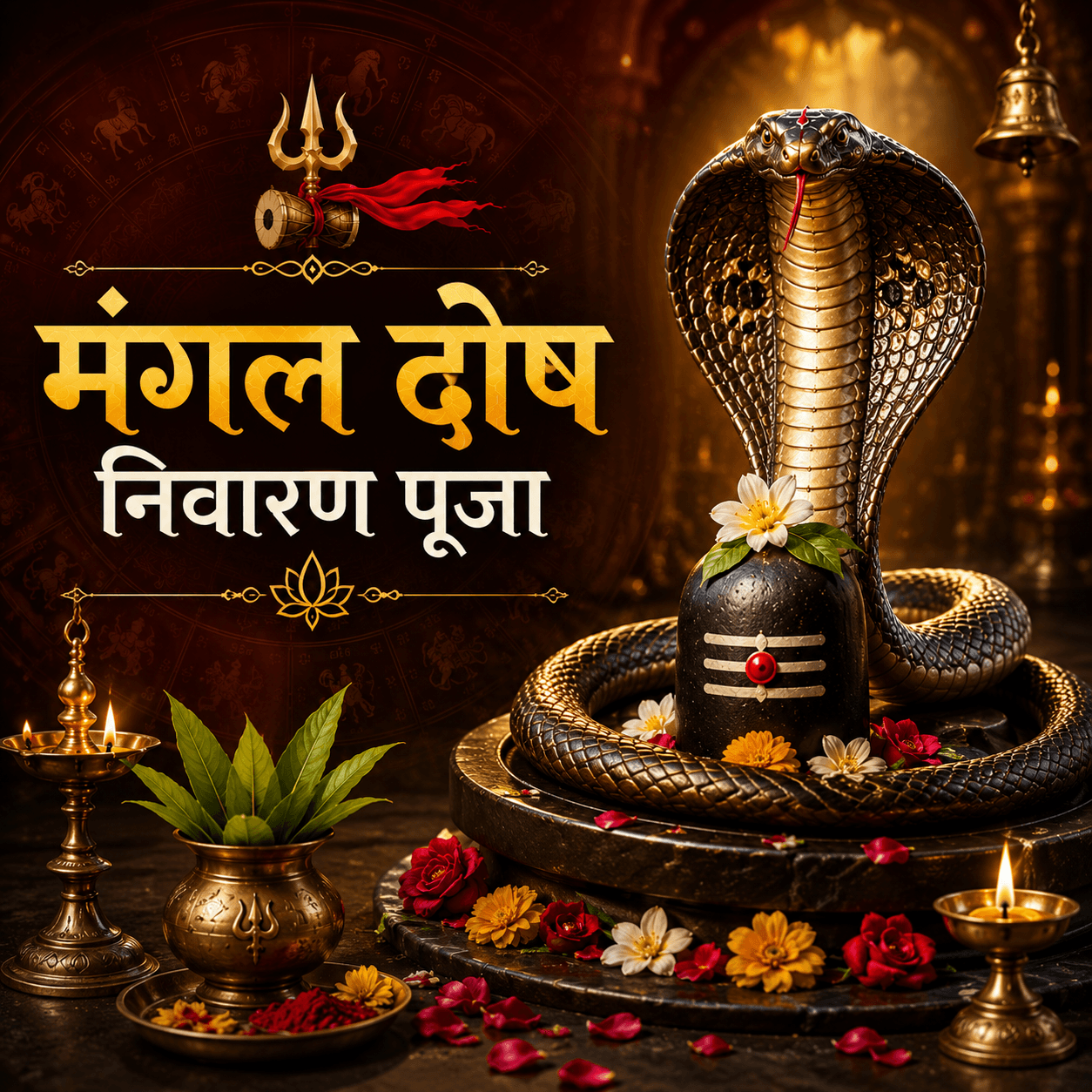
About this puja
“Om Angarakaya Namah”
A respectful invocation associated with Mangal worship — offered with humility and sincere intention.
Mangal Dosh Nivaran Puja is a traditional Vedic ritual performed to seek relief from the effects that are believed by some Hindu astrological traditions to be associated with Mangal Dosh (Manglik Dosh) in a person’s birth chart (Kundli).
The puja is performed by experienced Vedic priests through Vedic mantra chanting, prayers to Lord Hanuman, Lord Shiva, and Lord Mangal (Mars), along with other prescribed rituals according to traditional practices.
Mangal Dosh is a concept from certain schools of Vedic astrology. Its interpretation and significance may vary among astrologers and traditions.
Spiritual importance
According to Hindu beliefs, devotees perform this puja to pray for relief from effects associated with Mangal Dosh, harmony in marriage and relationships, and peace, stability, and happiness in family life.
Blessings sought
Devotees pray for relief from effects that some traditions associate with Mangal Dosh in the birth chart.
The sankalp often centres on harmony in marriage and relationships.
Offered with the intention of removing obstacles related to marriage proposals.
Devotees seek peace, stability, and happiness in family life through this traditional ritual.
Many devotees pray for success in personal and professional life as part of their intention.
The puja is offered for divine blessings toward good health, prosperity, and spiritual well-being.
Sacred offerings
A sankalp is taken in the devotee’s name before the ritual begins.
Sacred mantras are chanted by experienced Vedic priests according to traditional practice.
The main nivaran puja is performed as prescribed in traditional Vedic procedure.
Worship of Lord Shiva and Lord Hanuman is included as part of the traditional ceremony.
A havan may be included depending on the traditional procedure followed by the officiating priests.
A completion ceremony (Purnahuti) concludes the ritual.
Prasad is offered after the successful completion of the ritual.
Timing
~3–4 hours
Ritual duration is approximately 3–4 hours, including sankalp, Vedic mantra chanting, the main nivaran puja, worship of Lord Shiva and Lord Hanuman, and concluding rites.
Auspicious timing
The puja may be performed throughout the year whenever the intention feels meaningful.
Tuesdays are traditionally dedicated to Lord Hanuman and Lord Mangal and are often considered especially auspicious.
The holy month of Shravan (Sawan) is traditionally favoured for this ritual.
Maha Shivaratri is regarded as a highly auspicious occasion for Mangal Dosh Nivaran Puja.
Hanuman Jayanti is traditionally considered a favourable day for this puja.
Other auspicious dates may be recommended by a qualified Vedic priest or astrologer.
Who it is for
The puja may be performed on your behalf, with the sankalp taken in your name before the ritual begins.
May be performed for a spouse, with their name included in the sankalp according to traditional Vedic customs.
Suitable when offering this ritual for parents, with their names included in the sankalp.
Parents and guardians may dedicate the puja for their children through a shared sankalp.
The sankalp can include family members so the ritual is offered according to traditional Vedic customs.
Questions
Mangal Dosh Nivaran Puja is a traditional Vedic ritual performed to seek relief from the effects that some Hindu astrological traditions associate with Mangal Dosh (Manglik Dosh) in a person’s birth chart (Kundli). It is performed by experienced Vedic priests with sacred mantras and prayers to Lord Hanuman, Lord Shiva, and Lord Mangal (Mars).
The ritual includes sankalp in the devotee’s name, Vedic mantra chanting, Mangal Dosh Nivaran Puja, worship of Lord Shiva and Lord Hanuman, havan where applicable, final Purnahuti, and prasad after successful completion.
The ritual typically lasts approximately 3–4 hours.
The puja may be performed throughout the year. It is often considered especially auspicious on Tuesdays (dedicated to Lord Hanuman and Lord Mangal), during Shravan (Sawan), on Maha Shivaratri, on Hanuman Jayanti, and on other dates recommended by a qualified Vedic priest or astrologer.
This puja may be performed for yourself, your spouse, parents, children, or family members. The sankalp is taken in the devotee’s name before the ritual begins, and the puja is performed according to traditional Vedic customs.
Mangal Dosh is a concept from certain schools of Vedic astrology. Its interpretation and significance may vary among astrologers and traditions. This puja is offered as traditional remedial worship — not as a guarantee of marriage or specific life outcomes.
